“The only lesson I learned, or at least the only lesson I remember, was you.”
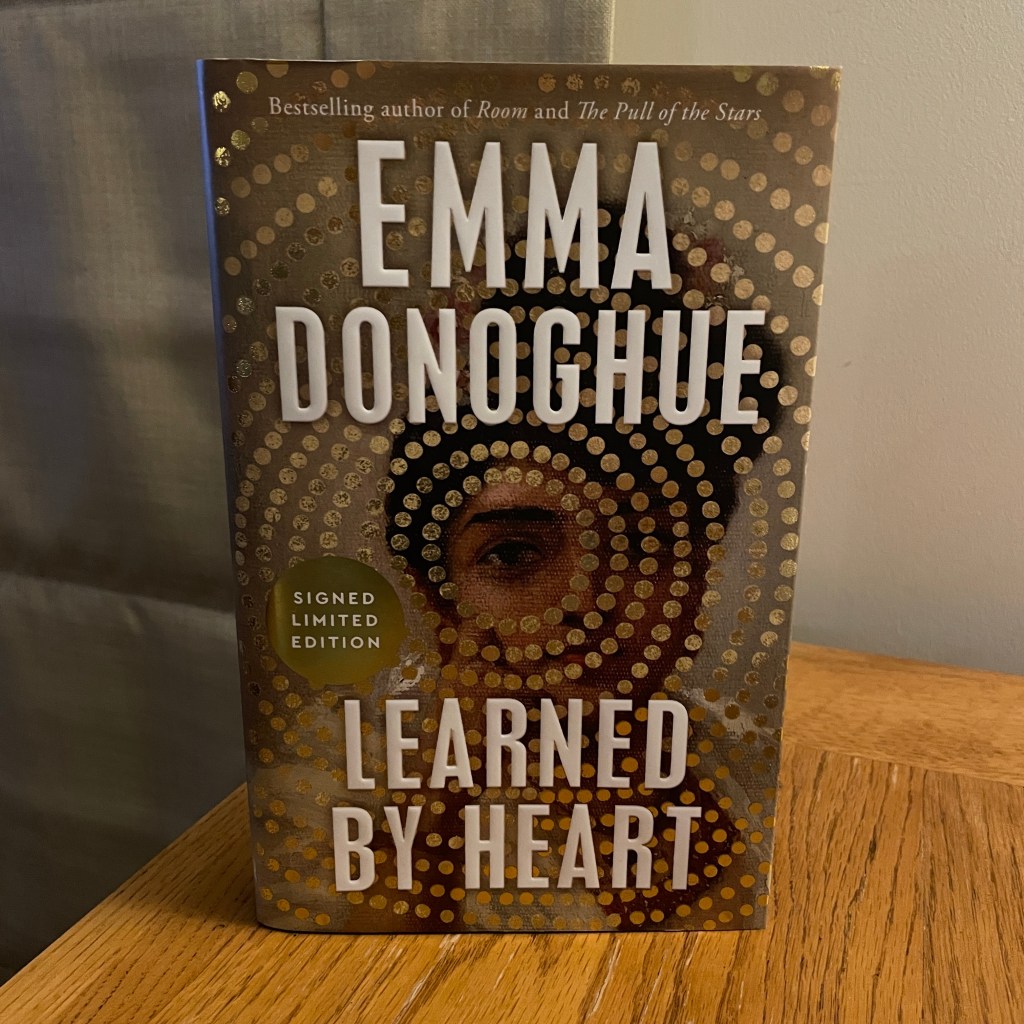
Emma Donoghue’s Learned by Heart is a poignant, intense and intricately-woven exploration of first love between Anne Lister and Eliza Raine, who share an attic room, known as ‘The Slope’, in their York boarding school.
Lister, an iconic businesswoman, landowner and diarist, is known to many readers from the BBC series ‘Gentleman Jack’. Eliza Raine was an orphan, born in Madras and forced to return to England.
Through Raine’s eyes, Lister is bright, bold and inquisitive – a maverick unafraid to challenge authority, and to do so loudly.
The intensity (and secrecy) of their connection is palpable, the claustrophobia mirroring the confines of their physical space.
Donoghue alternates the school narrative with Raine’s letters to Lister years later sent from her asylum. By this time, Raine is resentful, bitter and entreating by turns, lamenting the lost love and infusing the schoolgirls’ burgeoning relationship with poignancy.
While the historical detail and meticulous research is commendable and certainly enhanced the authenticity of the narrative, I felt it overwhelmed the narrative at times, at the expense of pace.
In spite of this, the novel is a compelling imagining of two girls in the first flushes of young love, learning their hearts and finding their feet. For Raine, that love endured beyond the confines of a boarding school attic.
It was an ending – the ending she yearned for all her life.
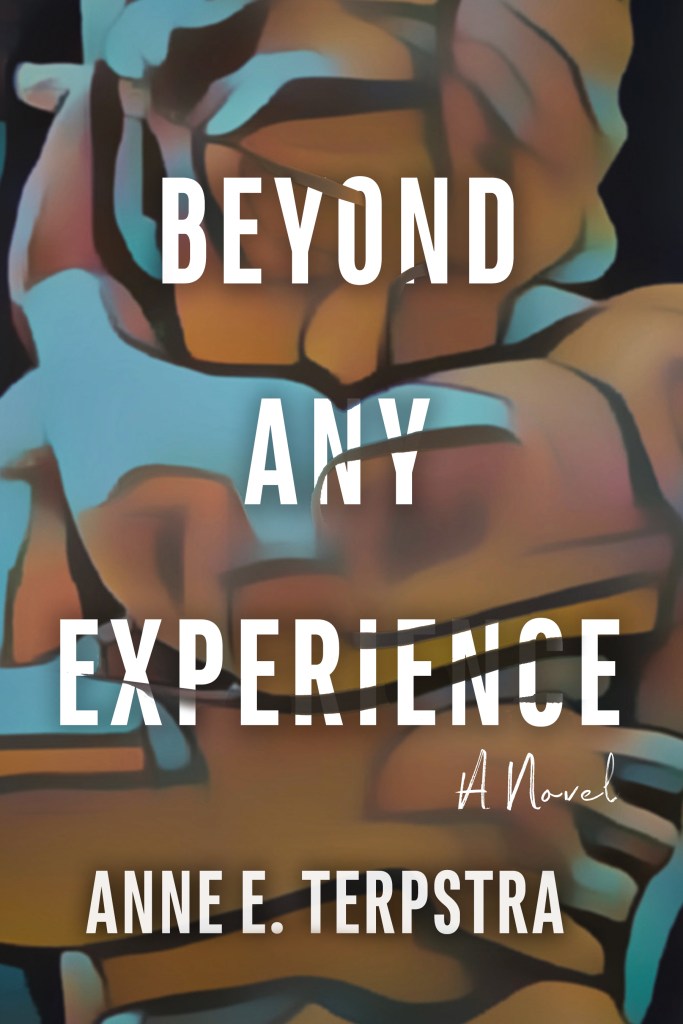
Anne E. Terpstra’s Beyond Any Experience is a love story that explores grief, intimacy and the difficulty of loving again after loss.
Olivia’s life is shattered when she loses her beloved wife, Sophia, in a tragic drink-driving accident. Now a single mother to her autistic son, Ben, Olivia grapples with the weight of her grief and the challenges of meeting Ben’s needs.
When Olivia crosses paths with Ellie, the latter makes no secret of her attraction. It was interesting to read a romance in which the characters fall for one another quickly, since most of the tension thereafter was in navigating the emotional complexities of their situation. Olivia is cautious and still reeling from her loss, and Olivia’s reticence fuels Ellie’s uncertainties and insecurities.
“Beyond Any Experience” is far from a straightforward, fairytale romance. The authenticity of the characters’ journey is testament to the author’s skill – the narrative never compromises on authenticity. The writing itself is beautifully crafted, drawing readers into the depths of Olivia and Ellie’s emotional worlds.
“For their sakes, show the world that people like you and they can be quite as selfless and fine as the rest of mankind. Let your life go to prove this — it would be a really great life-work, Stephen.”
Radclyffe Hall’s The Well of Loneliness is regarded as part of the sapphic canon — an international bestseller, a seminal work of gay fiction and the predecessor of lesbian pulp fiction.
Despite the fact that the book is not sexually explicit, it became the subject of an obscenity trial in the UK upon publication in 1928, resulting in an order that all copies of the book be destroyed. (That alone is reason enough to wade through it, in my opinion.)
As Stephen King famously said, we need to go and find the banned books, the censored books. Find out what it is they’re so desperate to keep from us.
Fortunately for us all, Radclyffe’s novel survived the controversy and, for decades, was regarded as the most renowned work of lesbian literature.
Stephen Gordon is is the epitome of an ideal child born to aristocratic parents — a skilled fencer, a keen horse rider, and an able scholar. In youth, Stephen becomes a war hero and a celebrated writer. But… Stephen, named after the boy her parents wanted, is a woman. An “invert”, in her own words. And the novel, quite simply, is the story of her struggle.
Given the title, perhaps it goes without saying that this book is neither an easy or uplifting read. Virginia Woolf commented, “the dullness of the book is such that any indecency may lurk there — one simply can’t keep one’s eyes on the page”.
Did I enjoy reading it? No. Am I glad I have read it? Absolutely.
It isn’t, of course, a read that fits with modern sensibilities. But it is, I would argue, essential reading. It’s part of sapphic history — a courageous and important cultural artefact that paints a vulnerable, sympathetic portrayal of lesbians and bears crucial witness to attitudes of the time.
In spite of its critical reception and legal troubles, The Well of Loneliness did what all great books do — it reached people and gave them words of comfort and understanding.
Puddle, Stephen’s governess, puts it best:
“You’re neither unnatural, nor abominable, nor mad; you’re as much a part of what people call nature as anyone else; only you’re unexplained as yet — you’ve not got your niche in creation. But some day that will come, and meanwhile don’t shrink from yourself, but face yourself calmly and bravely. Have courage; do the best you can with your burden. But above all be honourable. Cling to your honour for the sake of those others who share the same burden. For their sakes show the world that people like you and they can be quite as selfless and fine as the rest of mankind. Let your life go to prove this — it would be a really great life-work, Stephen.”
And wasn’t it just. The Guardian reports that Radclyffe Hall received thousands of letters of support. In one such letter, a married coal miner from Doncaster writes to the novelist that he is dismayed by the bigotry of so-called ‘thinking men’. “Some day,” he says, “we will wake up, and demand to know ourselves as we profess to know about everything else”.
A little later than planned (because I have been bashing my way through a structural rewrite of my book!), a review of Summer People by Julie Cohen.
Cohen’s Together is one of my all-time favourite books. Not only is the writing sublime and the love story breathtaking, but the structure is incredible. The story is told backwards, which – for a love story with a jaw-dropping twist – is the writerly equivalent of tight-rope walking on a unicycle while standing on your head.
So I was already excited for the release of Summer People. Then I found out it has bi rep… So basically it bypassed my entire TBR pile the second it crashed through the letterbox.
Despite the ‘Summer’ in the title (and the cover), this book isn’t a light, summery read. It’s intense, gripping and moving.
The story takes place on Unity Island, off the coast of Maine, and the location is an important character in its own right.
Vee is a returning native, who left the island long ago, hence she returns with the tourists – the ‘Summer People’ and finds that she doesn’t quite belong in either camp anymore.
For one thing, there’s the ongoing feud with her oldest friend, Sterling, who felt abandoned by Vee’s departure. And then there’s his wife, the irresistible Rachel.
The book has a very intense and claustrophobic feel, and yet there’s room for the evocative writing that, in my view, sets Julie Cohen apart.
These characters were flawed and selfish at times, but honestly and realistically so – they felt nuanced and rang utterly true to me.
Cohen never takes the easy way out and there was lots to reflect on here, from the power of secrets to past choices and forbidden love.
You can find out a bit more about each of these stories below.
Whatever the outcome, entering the Page Turner Awards has been a really positive experience.
Here’s a little more about the stories…
Darling Girl —Elisabeth was the love of Leni’s life. But Elisabeth was pure fiction. A manipulator. A troubled soul. And the day after she left Leni with a Dear John letter and a broken heart, Elisabeth’s husband turned up on Leni’s doorstep, looking for her.
Eight months on, something feels very, very wrong. A traumatised Leni receives a parcel that can only be from her former lover. Believing Elisabeth to be in danger, Leni will stop at nothing to follow the clues within and find her. But Elisabeth left to protect Leni from a dark secret – and from someone who would kill to keep them apart.
While She Lay Sleeping — Kate keeps dreaming that her baby is kidnapped. One morning, she wakes to find that her nightmare is reality, and her partner, Anna, is behaving suspiciously.
Each woman knows more than she’s letting on, but can they trust one another? If they want their daughter back, they’ll have to find a way through the secrets and lies that threaten to break them.
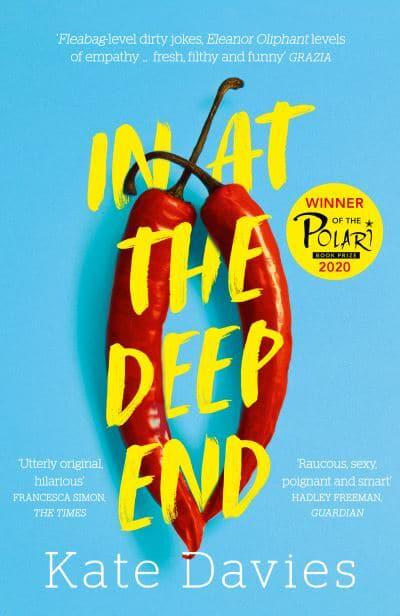
Julia has been celibate for three years and when the dry spell breaks, it isn’t anything to write home about, to put it mildly. And it isn’t just her sex life that’s lacking. No longer able to pursue her dream of dancing professionally, she’s stuck in a dead-end job. When she meets Sam, Julia is in at the deep end as a new lesbian – introduced to a world of gay bars, BDSM and polyamory.
I read somewhere that Kate Davies set out to write a version of ‘Girls’ for lesbians, and I think she’s realised her goal. Julia’s voice is unique, warm, hilarious and utterly relatable. Whilst the sex, drugs and parties are all plentiful and no holds barred, the voyage of self-discovery in this novel goes far beyond sex and sexuality. It’s a nuanced and at times heart-rending exploration of the intensity of first loves, coercion, guilt and jealousy.
The changes in Julia’s life touch every corner of it – from her relationships with her family to her job, her past and her ambitions for the future. We see a woman not only getting to grips with a new understanding of her sexuality, but settling into a life which is altogether changing shape to meet the person she is becoming.
This book is as frank, filthy and funny as billed and I read it in a couple of days flat. An abundance of laugh-out-loud moments, a rounded cast of characters and a tangled central relationship is a winning combination that kept me coming back for more.
It’s 1955 in New York and school teachers, Dovie and Gillian, live together in a small apartment on the Lower East Side. Out of necessity, their private life has always been a closely-guarded secret… until now.
Twenty years on, young Ava Winters lives in the same apartment, struggling to cope with her mother’s deteriorating mental health, without much help from her absent father.
One morning, Ava’s mother disappears and Ava receives a parcel. It contains, amongst other things, a photo of a woman with the word ‘LIAR’ scribbled across her face.
In a bid to escape from her own difficulties, Ava tries to track down the apartment’s former occupants in a bid to discover what happened.
This book was beautifully written, gripping and immersive – I think I devoured it in two or three sittings, which is no mean feat when you have small children.
I loved spending time in Gillian and Dovie’s world. The characters were immensely relatable across time and geography and the historical setting was well realised, from smoky jazz clubs of 50s New York to a quiet Parisian apartment.
At risk of spoilers, I feel obliged to point out that this book couldn’t be categorised as a romance. It had a Hardy-esque inevitability of tragedy, with a happier outcome close enough to touch, but constantly slipping from reach. The two women’s happiness at the beginning feels like a vignette with something heavy already creeping around the edges, and the book is taut with tension throughout.
It’s really exciting to see a f/f book in the mainstream, and as a major title for Michael Joseph this year. Long may this trend continue!
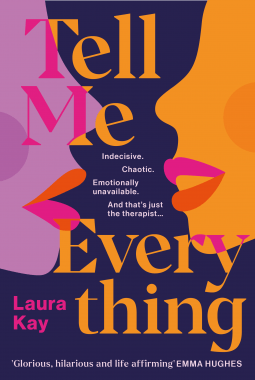
I’m a big fan of Laura Kay’s writing. I really enjoyed her first book, ‘The Split’ and liked this latest one even more.
‘Tell Me Everything’ is a sapphic story set in Brighton. I hesitate to call it a rom-com, because it treats so much more than the romance.
Natasha is a therapist – but despite how it may appear to her clients, she doesn’t have her life together. She’s still living with her ex, Georgia, and it’s beginning to get messy. Then she meets the free-spirited, capricious Margot, who makes her question where she’s going in life and what she’s looking for.
She is surrounded by family (her twin sister, Natalie and friend, Charlie are great cameos) but troubled by issues from her past that she’s never fully addressed. When Natasha’s friends take her on holiday to the States, she has the chance to heal old wounds and discover what’s important to her.
What I loved most about this book? First, I didn’t know who was going to end up winning Natasha’s heart, and really enjoyed that unpredictability. And second, Natasha is an adorable character who doesn’t realise how lovable she is. Conveying that whilst maintaining a single viewpoint (Natasha’s) is no mean feat, and from a writerly perspective, I was taking notes!
This novel has Kay’s trademark blend of comedy, lump-in-throat moments and plenty of tension. There’s so much warmth in the writing. Kay is gifted at creating characters you just want to spend time with, and in writing f/f fiction that’s upbeat but not fluffy, moving but never maudlin. Bring on the next book!*
My thanks to Laura, Quercus and NetGalley for providing an ARC in exchange for an honest review.
*Ooh… Wild Things by Laura Kay is out next year and you can preorder here.
When I started this book, I thought we were in romance territory and that I knew exactly where it was heading. Wrong on both counts!
The exciting thing about So Happy For You is that it’s lesfic that gets to be something else – part thriller, part dystopia, perhaps. I’ve seen some apt comparisons to Black Mirror.
The book is set in a misogynistic near future in the US, where the government incentivises marriage and severely limits abortion. (So far, so real.) Women are ‘leftovers’ in their late 20s and ‘rotten’ by their 30s. Then there are the ‘wedding charms’, the weird hazing-esque rituals that brides undertake to ensure the success of their wedding, and future fertility.
Robin, the main character, doesn’t buy into any of this – in fact, she roundly rejects the institution of marriage and is happy with her partner, Aimee. But Ellie, Robin’s best friend since childhood, is getting married, and she wants Robin to be her maid of honour. Robin is torn between her principles and her loyalty to Ellie.
As the wedding approaches, Ellie’s behaviour becomes bizarre, to say the least. The book gets dark quickly, and the second half is a weird, wild rollercoaster that kept me hooked. I honestly didn’t know what was coming next.
I really liked Robin, though she’s probably a ‘Marmite’ character. She’s witty, with a dry sense of humour, and a vulnerability which manifests as cynicism. Her ‘coming out’ story is addressed in the novel, but it’s not central to the plot. I really warmed to her and found myself rooting for her throughout.
This was a rip-roaring book that manages to do humour, satire, gut-wrench and edge-of-the-seat thriller… sometimes all in the space of a few pages. It’s refreshing to see lesbian fiction that’s permitted to be outside-the-box and genre-bending. I’m definitely off in search of more Celia Laskey.
My thanks to the publisher and NetGalley for an ARC in return for an honest review.
An uplifting, slow-burn YA f/f romance perfect for summer.
She Gets The Girl by Rachael Lippincott and Alyson Derrick
I don’t usually read rom-com or YA, but I’d heard Rachael Lippincott’s name a few times and decided to check this one out. Lippincott wrote this one with her wife, Alyson Derrick. I’m always intrigued by the process of two writers working together, and especially a wife-and-wife team!
She Gets The Girl features two girls meeting in their first year of college.
Alex is an independent, confident and flirty girl who wants to show her on-again-off-again girlfriend, Natalie, that she’s capable of commitment. But she has some stuff to figure out first, and some distance from Natalie – literal and figurative – might be exactly what she needs to do that.
Molly is painfully introverted and socially awkward. She is close to her family – her mom is her best friend – and can’t pluck up the courage to speak to her high school crush, Cora.
When the girls end up on the same college campus and Alex learns of Molly’s infatuation, she decides to help Molly get her girl, in an attempt to show Natalie that she can form meaningful connections without a vested interest. Alex convinces Molly to follow her five-step plan. Only problem is, she’s making it up as she goes along.
The natural relationship that evolves between the two main characters enables each to face and fight their demons in a story that is by turns hilarious, angsty and heartbreaking. The dialogue is full of banter, dry humour and plenty that’s left unsaid.
Whilst the book does feature darker topics – alcoholism and racism, to name but a few – the characters’ backstories are woven into the story in a way that was impactful without being heavy-handed.
The slow-burn, hate-to-love romance was well-paced, and the dual narrative worked beautifully. Each character has a distinct voice and seeing the same situation from their very different perspectives is a great source of humour in the book.
The outcome isn’t a surprise (the clue’s in the title) but this is a book you read for the journey, rather than the destination.
This is a light, uplifting book – the perfect addition to your sun lounger this summer.







 Victoria Brown