“The only lesson I learned, or at least the only lesson I remember, was you.”
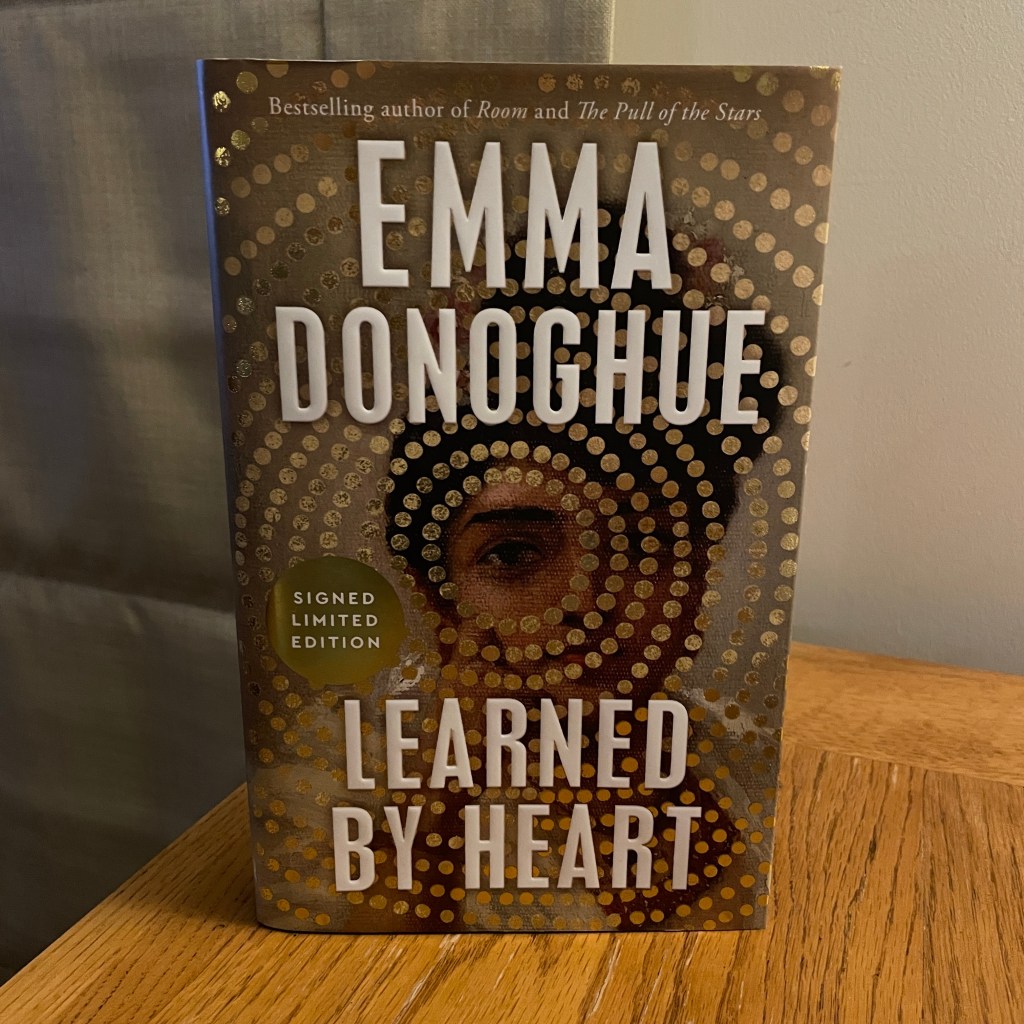
Emma Donoghue’s Learned by Heart is a poignant, intense and intricately-woven exploration of first love between Anne Lister and Eliza Raine, who share an attic room, known as ‘The Slope’, in their York boarding school.
Lister, an iconic businesswoman, landowner and diarist, is known to many readers from the BBC series ‘Gentleman Jack’. Eliza Raine was an orphan, born in Madras and forced to return to England.
Through Raine’s eyes, Lister is bright, bold and inquisitive – a maverick unafraid to challenge authority, and to do so loudly.
The intensity (and secrecy) of their connection is palpable, the claustrophobia mirroring the confines of their physical space.
Donoghue alternates the school narrative with Raine’s letters to Lister years later sent from her asylum. By this time, Raine is resentful, bitter and entreating by turns, lamenting the lost love and infusing the schoolgirls’ burgeoning relationship with poignancy.
While the historical detail and meticulous research is commendable and certainly enhanced the authenticity of the narrative, I felt it overwhelmed the narrative at times, at the expense of pace.
In spite of this, the novel is a compelling imagining of two girls in the first flushes of young love, learning their hearts and finding their feet. For Raine, that love endured beyond the confines of a boarding school attic.
It was an ending – the ending she yearned for all her life.
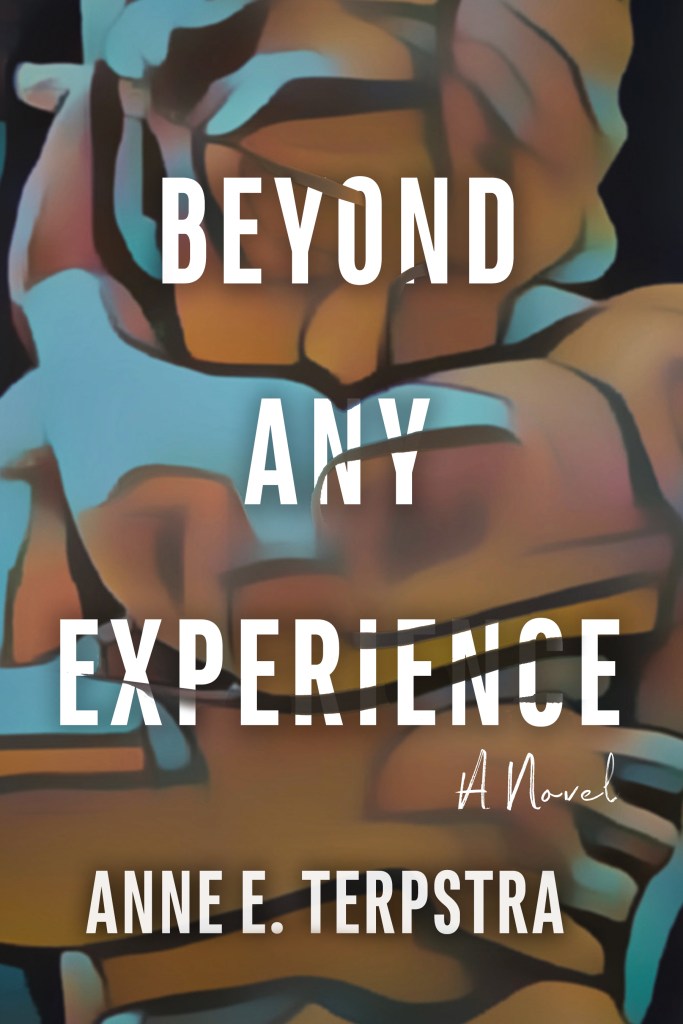
Anne E. Terpstra’s Beyond Any Experience is a love story that explores grief, intimacy and the difficulty of loving again after loss.
Olivia’s life is shattered when she loses her beloved wife, Sophia, in a tragic drink-driving accident. Now a single mother to her autistic son, Ben, Olivia grapples with the weight of her grief and the challenges of meeting Ben’s needs.
When Olivia crosses paths with Ellie, the latter makes no secret of her attraction. It was interesting to read a romance in which the characters fall for one another quickly, since most of the tension thereafter was in navigating the emotional complexities of their situation. Olivia is cautious and still reeling from her loss, and Olivia’s reticence fuels Ellie’s uncertainties and insecurities.
“Beyond Any Experience” is far from a straightforward, fairytale romance. The authenticity of the characters’ journey is testament to the author’s skill – the narrative never compromises on authenticity. The writing itself is beautifully crafted, drawing readers into the depths of Olivia and Ellie’s emotional worlds.
“For their sakes, show the world that people like you and they can be quite as selfless and fine as the rest of mankind. Let your life go to prove this — it would be a really great life-work, Stephen.”
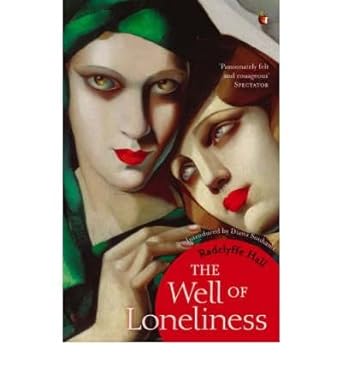
Radclyffe Hall’s The Well of Loneliness is regarded as part of the sapphic canon — an international bestseller, a seminal work of gay fiction and the predecessor of lesbian pulp fiction.
Despite the fact that the book is not sexually explicit, it became the subject of an obscenity trial in the UK upon publication in 1928, resulting in an order that all copies of the book be destroyed. (That alone is reason enough to wade through it, in my opinion.)
As Stephen King famously said, we need to go and find the banned books, the censored books. Find out what it is they’re so desperate to keep from us.
Fortunately for us all, Radclyffe’s novel survived the controversy and, for decades, was regarded as the most renowned work of lesbian literature.
Stephen Gordon is is the epitome of an ideal child born to aristocratic parents — a skilled fencer, a keen horse rider, and an able scholar. In youth, Stephen becomes a war hero and a celebrated writer. But… Stephen, named after the boy her parents wanted, is a woman. An “invert”, in her own words. And the novel, quite simply, is the story of her struggle.
Given the title, perhaps it goes without saying that this book is neither an easy or uplifting read. Virginia Woolf commented, “the dullness of the book is such that any indecency may lurk there — one simply can’t keep one’s eyes on the page”.
Did I enjoy reading it? No. Am I glad I have read it? Absolutely.
It isn’t, of course, a read that fits with modern sensibilities. But it is, I would argue, essential reading. It’s part of sapphic history — a courageous and important cultural artefact that paints a vulnerable, sympathetic portrayal of lesbians and bears crucial witness to attitudes of the time.
In spite of its critical reception and legal troubles, The Well of Loneliness did what all great books do — it reached people and gave them words of comfort and understanding.
Puddle, Stephen’s governess, puts it best:
“You’re neither unnatural, nor abominable, nor mad; you’re as much a part of what people call nature as anyone else; only you’re unexplained as yet — you’ve not got your niche in creation. But some day that will come, and meanwhile don’t shrink from yourself, but face yourself calmly and bravely. Have courage; do the best you can with your burden. But above all be honourable. Cling to your honour for the sake of those others who share the same burden. For their sakes show the world that people like you and they can be quite as selfless and fine as the rest of mankind. Let your life go to prove this — it would be a really great life-work, Stephen.”
And wasn’t it just. The Guardian reports that Radclyffe Hall received thousands of letters of support. In one such letter, a married coal miner from Doncaster writes to the novelist that he is dismayed by the bigotry of so-called ‘thinking men’. “Some day,” he says, “we will wake up, and demand to know ourselves as we profess to know about everything else”.
You can find out a bit more about each of these stories below.
Whatever the outcome, entering the Page Turner Awards has been a really positive experience.
Here’s a little more about the stories…
Darling Girl —Elisabeth was the love of Leni’s life. But Elisabeth was pure fiction. A manipulator. A troubled soul. And the day after she left Leni with a Dear John letter and a broken heart, Elisabeth’s husband turned up on Leni’s doorstep, looking for her.
Eight months on, something feels very, very wrong. A traumatised Leni receives a parcel that can only be from her former lover. Believing Elisabeth to be in danger, Leni will stop at nothing to follow the clues within and find her. But Elisabeth left to protect Leni from a dark secret – and from someone who would kill to keep them apart.
While She Lay Sleeping — Kate keeps dreaming that her baby is kidnapped. One morning, she wakes to find that her nightmare is reality, and her partner, Anna, is behaving suspiciously.
Each woman knows more than she’s letting on, but can they trust one another? If they want their daughter back, they’ll have to find a way through the secrets and lies that threaten to break them.



 Victoria Brown